


The History of Penrhiw
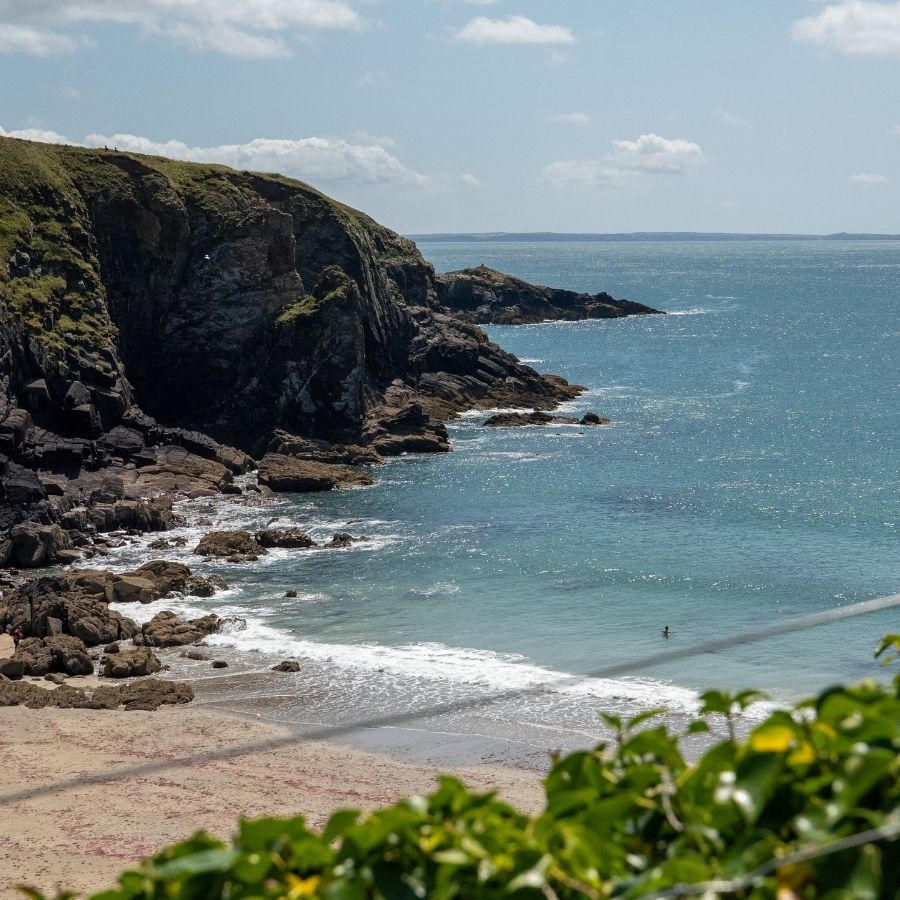
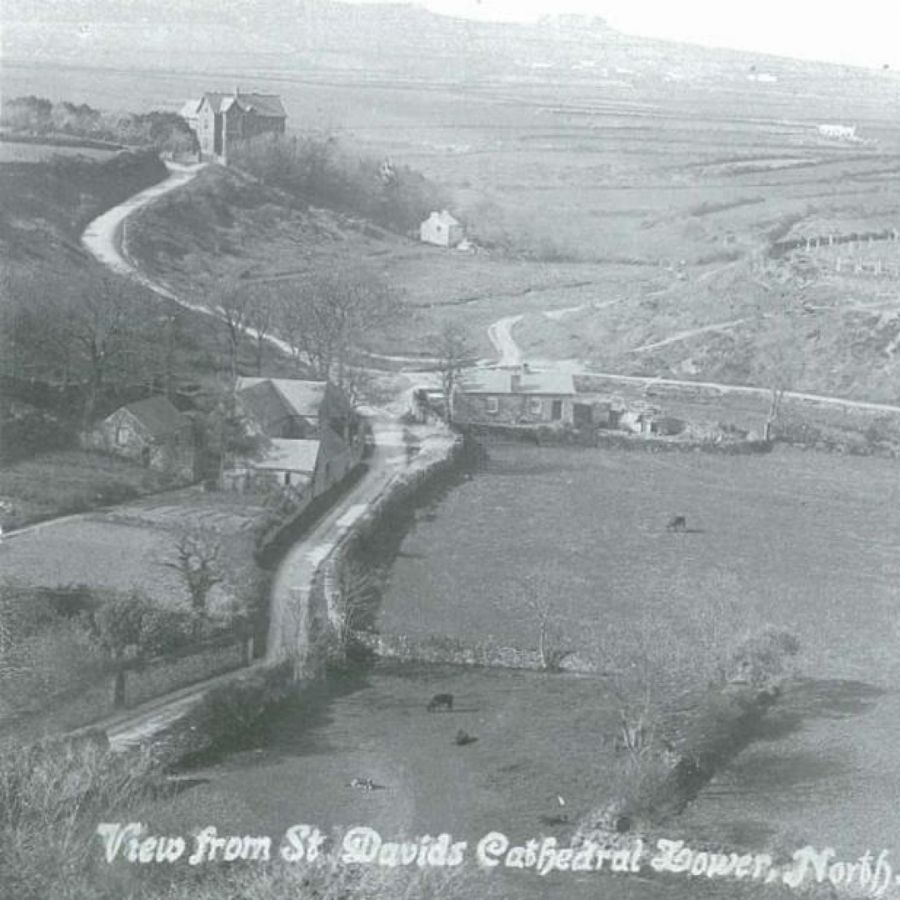
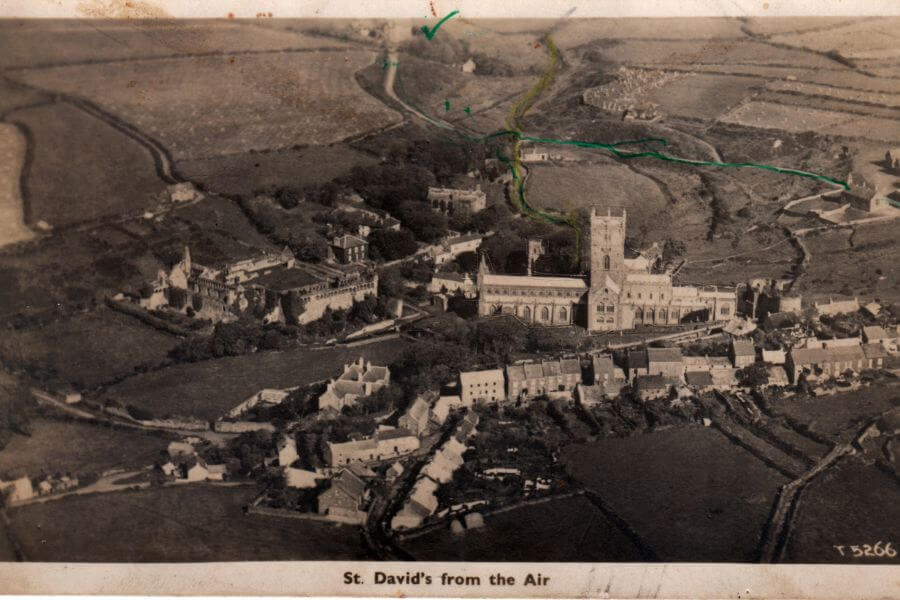
Nestled in the Cathedral Valley, Penrhiw Priory has been part of the St Davids landscape for generations. Today, it is a peaceful place to stay, surrounded by gardens, woodland and open countryside, but the history of the property tells a story of continual change.
Over the years, Penrhiw has been a farmstead, a vicarage, a private residence, a guest house, a priory and a retreat. Each chapter has left its mark on the building and its surrounding landscape.
The story of Penrhiw begins long before the Priory itself was built. The Priory stands on the site of a large longhouse farm building. Like many traditional Pembrokeshire farmsteads, the building would have formed an important part of the rural landscape surrounding St Davids. Over the years, additions and extensions were made to the original structure, gradually changing the footprint of the property.
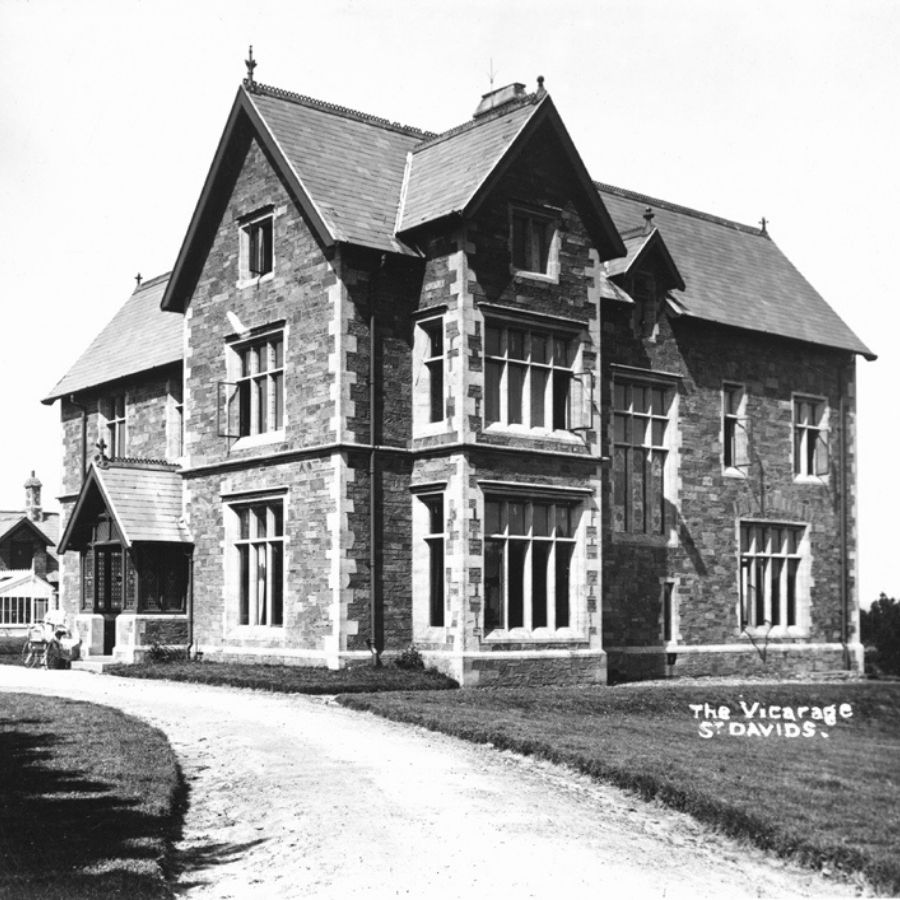
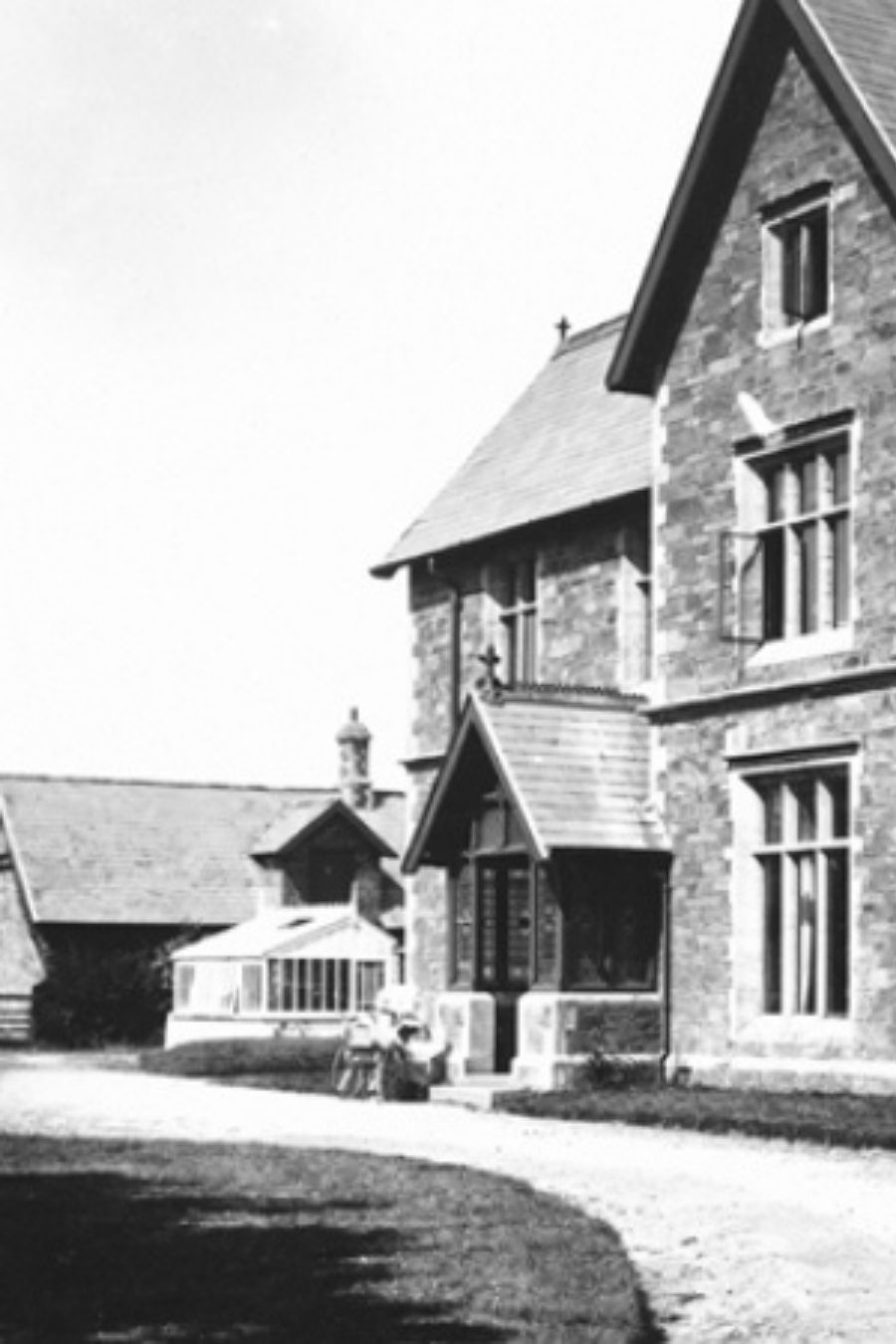
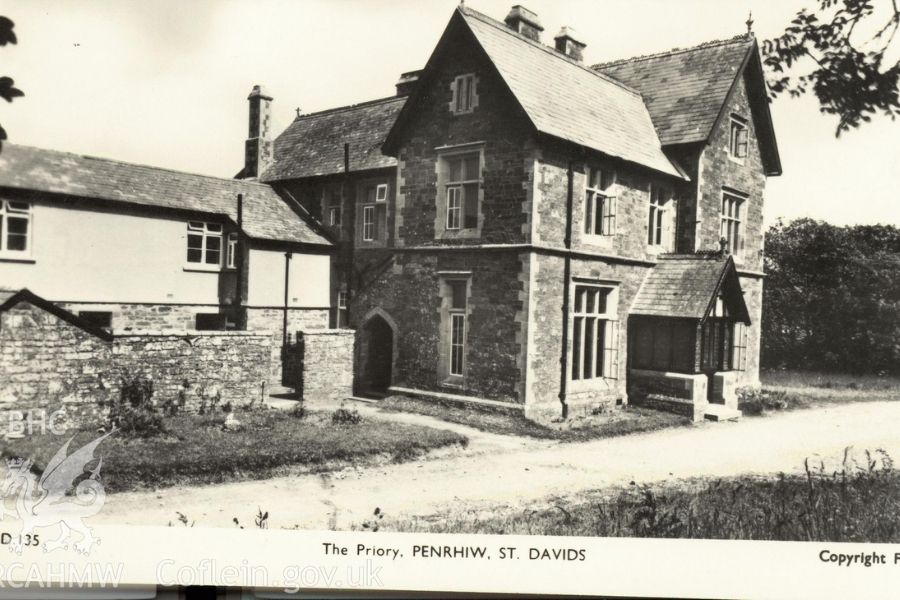
In 1884, a significant new chapter began when Penrhiw was built by the Church in Wales as a vicarage. The property was designed by John Middleton and Son of Cheltenham and created as a substantial home for the vicar serving the parish of St Davids.
The building is a fine example of High Victorian architecture, designed in the Tudorbethan style. Constructed from squared Caerbwdi rubble stone with limestone ashlar dressings, Penrhiw is characterised by its steep slate roofs, decorative bargeboards, terracotta ridge tiles and tall stone chimneys. Inside, many of the original Victorian features remain. The interior woodwork is pitch pine, with deep skirting boards, large panelled doors and panelled window reveals. The house also retains a beautiful staircase and two impressive fireplaces featuring decorative tiles by William De Morgan, the celebrated Arts and Crafts ceramic designer.
Penrhiw was built as more than simply a comfortable residence. The Church in Wales placed a vicar here to serve the local parishioners at a time when many people were moving towards non-conformist chapels.
The vicar’s bedroom can still be identified today as the Garden Bedroom. From here, the vicar would have lived at the heart of the Cathedral Valley, surrounded by the people and community he was there to serve.
The stables were also an important part of life at Penrhiw. They housed the vicar’s horses and carriage, allowing him to travel across the parish to visit parishioners. Today, these historic buildings have found new uses. The former Coach House is now home to the Meadow Suite on the ground floor and Court on the first floor, continuing the long tradition of adapting Penrhiw’s historic buildings for new generations.
During the twentieth century, Penrhiw’s role began to change. It eventually ceased to operate as a vicarage and became a private residence.
For a time, the local doctor lived at Penrhiw, before Colonel and Mrs Weir took over the property and ran it as a guest house for many years. During this period, Penrhiw welcomed a number of notable guests. Anthony Eden, who would later become Prime Minister of the United Kingdom, stayed at Penrhiw on several occasions.
The Second World War brought another important chapter to the history of Penrhiw. During the war, the property opened its doors to children evacuated from London. As cities faced the threat of bombing, thousands of children were moved to rural areas across Britain for their safety. Penrhiw became one of the places offering refuge to young evacuees.
Today, postcards describing their time at Penrhiw provide a personal connection to this period of history. They offer a glimpse into the lives of the children who temporarily called Penrhiw home during the uncertainty of wartime.
Accounts describe two girls sharing one room and three boys staying in another, providing a small but powerful reminder that the peaceful bedrooms visitors enjoy today were once home to children far from their families and familiar surroundings.
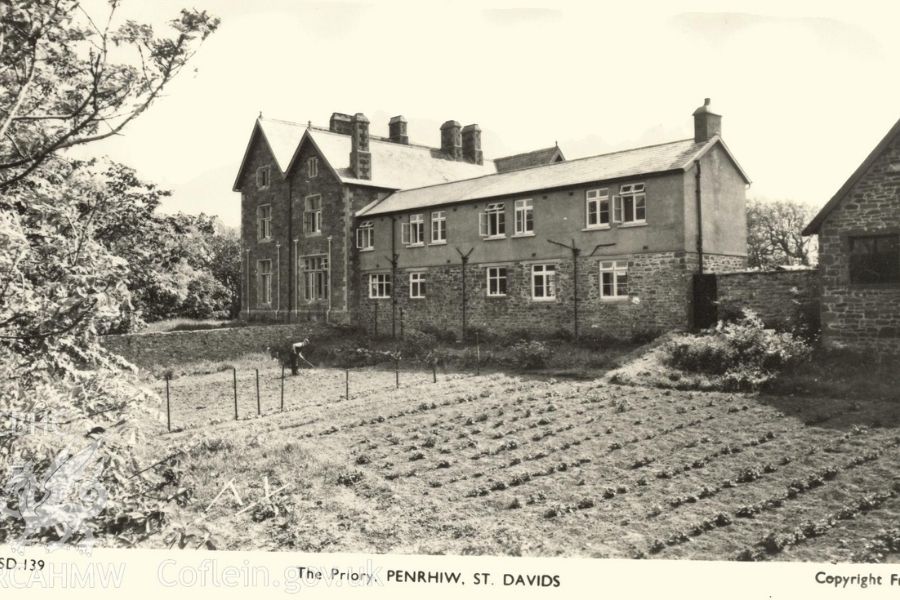
Following the war, Penrhiw continued to evolve. In the 1960s, the property became a Priory for the Community of St John the Evangelist. This was one of the most significant periods in the history of Penrhiw and gave the property the name by which it is known today.
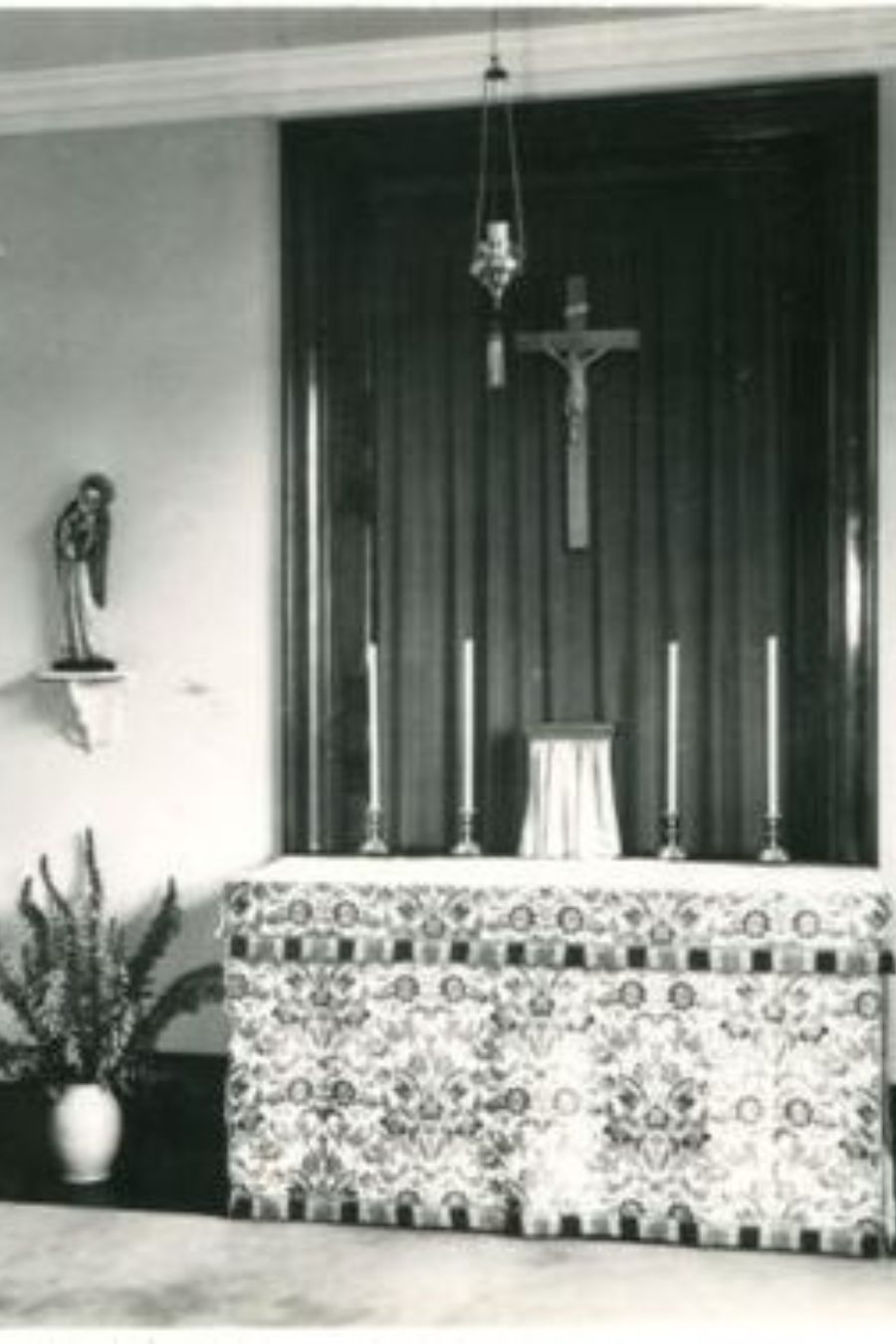
During this time, Penrhiw was extended to provide accommodation for the religious community. The property eventually included 20 bedrooms, three reception rooms and a chapel. Multiple extensions were built over the years in the space between the main building and the coach house, connecting the two and creating a small courtyard in the middle. During the later restoration of Penrhiw, these were removed, helping to reveal and reinstate the original form and character of the historic building
The nuns who lived at Penrhiw also made their mark on the surrounding landscape. The formal Victorian gardens were put to practical use, with areas used for growing vegetables. The gardens would have played an important role in supporting life at the Priory, providing fresh produce for the community.
Beyond the gardens, the field next to Penrhiw was also transformed. During their time at the Priory, the nuns created a wildflower meadow, bringing another dimension to the landscape surrounding the building.
This connection between Penrhiw and its natural surroundings remains an important part of the property today. In recent years, considerable time and care have been spent working to reinstate the wildflower meadow. The aim has been to restore and encourage the natural landscape that was once created and enjoyed by the community at Penrhiw.
Today, the meadow is once again a place where guests can slow down and enjoy the changing seasons, with wildflowers and wildlife providing a connection between Penrhiw’s past and present. The Community of St John the Evangelist remained at Penrhiw until 1985, when the nuns left the Priory.
In 1988, the Church in Wales sold Penrhiw to Steve and Lis Cousens, who began another new chapter for the property. They ran Penrhiw as a centre for groups, welcoming up to 30 people at a time. The building continued its long association with rest, reflection and hospitality.
Following this period, Tim Sime ran Penrhiw as a retreat for four years. In 2004, the property was sold to Adam Hill and Rachael Knott.
In 2009, Penrhiw was acquired by the Griffiths Roch Foundation. A significant restoration project soon began, with a contract awarded to Carreg Construction in July 2009. The work was carried out under the design and supervision of architects Acanthus Holden.
The restoration aimed to respect the history and character of Penrhiw while preparing the building for its next chapter. During the renovation, particular attention was given to the historic structure of the property. Later additions that had changed the form of the original longhouse & Priory were carefully reconsidered, including the extensions. The removal of these additions helped return the property closer to its original form and allowed the history of the building to become more visible once again.
After extensive restoration, Penrhiw reopened in 2012 as luxury eight-bedroom guest accommodation. The transformation gave new life to the historic building while retaining its distinctive Victorian character and connection to the Cathedral Valley.
Today, Penrhiw Priory continues its long tradition of welcoming people.
The property has been a home for a vicar, a refuge for wartime evacuees, a residence for a religious community, a guest house and a retreat.
Each generation has used Penrhiw in a different way, but there is a common thread running throughout its history: it has always been a place where people have come to live, stay, reflect and connect with the landscape around them.
The formal gardens, once used by the nuns to grow vegetables, remain an important part of the setting. The wildflower meadow, first created during the Priory’s religious chapter and carefully reinstated over recent years, continues to provide a peaceful place to enjoy nature.
The former stables and Coach House have been given new life as guest accommodation, while the rooms of the Victorian vicarage continue to welcome visitors more than a century after the building was first constructed.
As you explore Penrhiw Priory today, we invite you to look closely at the details around you. Notice the Victorian stonework, the original woodwork and fireplaces. Explore the gardens and imagine the generations who have cared for this landscape. Think of the children who arrived here during the war, the vicar who travelled the parish by horse and carriage, and the nuns who made Penrhiw their home.
A Wartime Home
During the Second World War, Penrhiw Priory became a temporary home for children evacuated from London. Discover their stories and uncover this little-known chapter in the Priory’s history.